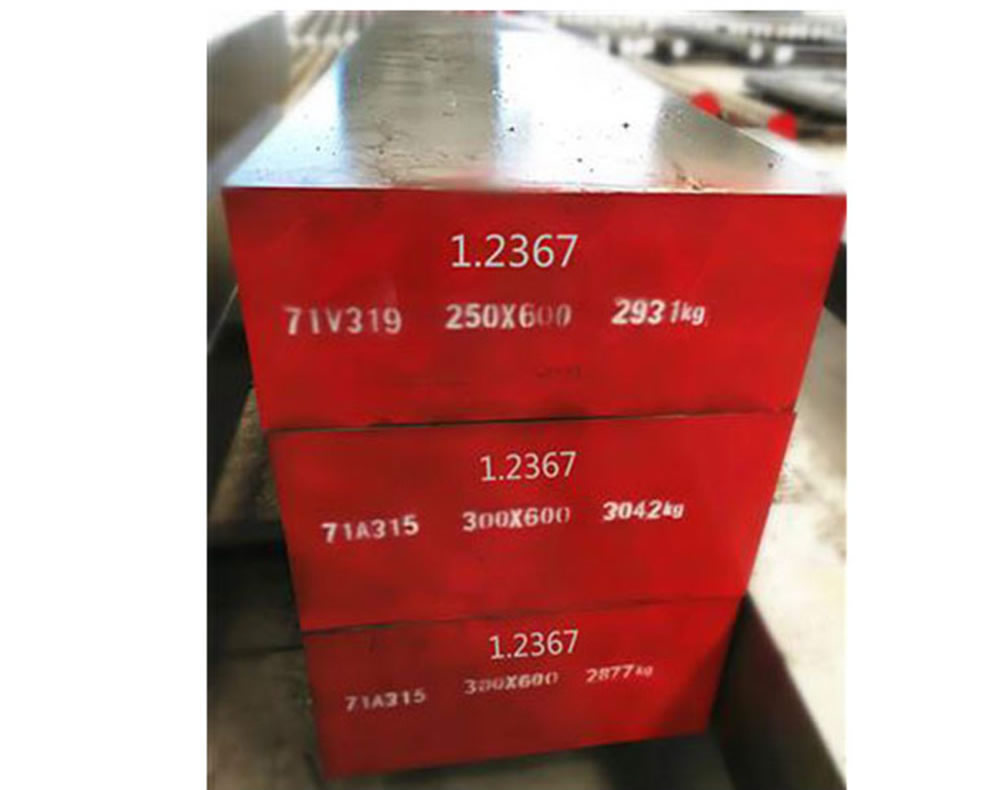
EN/DIN 1.2367 ESR is used with great success in making inserts for light alloys die casting dies (for aluminium, Zamak, magnesium and brass), as well as for thermosets and thermoplastic injection molding dies. Further applications of EN/DIN 1.2367 ESR are: light alloys extrusion tooling, such as liners, mandrels, pressure pads, extrusion stems and dies; forging and hot stamping of light and heavy metals; closed dies, punches, stamps and jaws; hot rolling rolls, as well as hot cutting applications, such as circular cutting blades, straight cutting blades and angular cutting blades.
EN / DIN 1.2367 ESR viene utilizzato con grande successo nella realizzazione di inserti per stampi in lega leggera (per alluminio, zama, magnesio e ottone), nonché per termoindurenti e stampi per stampaggio a iniezione termoplastici. Ulteriori applicazioni dell'ES / DIN 1.2367 ESR sono: utensili per estrusione di leghe leggere, come rivestimenti, mandrini, cuscinetti a pressione, steli e filiere di estrusione; forgiatura e stampaggio a caldo di metalli leggeri e pesanti; stampi chiusi, punzoni, timbri e mascelle; rulli di laminazione a caldo, così come applicazioni di taglio a caldo, come lame circolari, lame di taglio diritte e lame di taglio angolari.
ANHUAI CO., LTD info@xingxionggroup.com for more information about the 1.2367 | X38CrMoV5-3 steel.
ANHUAI CO., LTD info@xingxionggroup.comper ulteriori informazioni sull'acciaio 1.2367 | X38CrMoV5-3.
Chemical Composition
1.Similar Grade
GB
AISI
DIN
JIS
EN
TOCT
ISO
BS
UNS
4Cr5Mo2SiV
1.2367
C
Si
Mn
P
S
Cr
Mo
V
4Cr5Mo2SiV
0.35-0.45 %
0.80-1.20 %
0.25-0.70 %
≤0.030 %
≤0.030 %
3.00-3.75 %
2.00-3.00 %
1.40-1.80 %
1.2367
0.35-0.40
0.30-0.50
0.30-0.60
≤0.035
≤0.010
4.70-5.20
2.70-3.30
0.40-0.70
2.Characteristics
1. Chrome-molybdenum-vanadium steel for hardening in oil and in air with very good hardenability,
high firmness during the heat and resistance to the tempering
2. Very good toughness and plastic properties during normal and also higher temperatures.
3. Very good resistance to tearing of thermal fatigue and low sensitivity to quick changes of temperature. The steel is appropriate for the heat treatment also for firmness over 1800N/mm2 and for tools cooled
by water. It is well-workable during the heat and well-workable in the soft-annealed state.